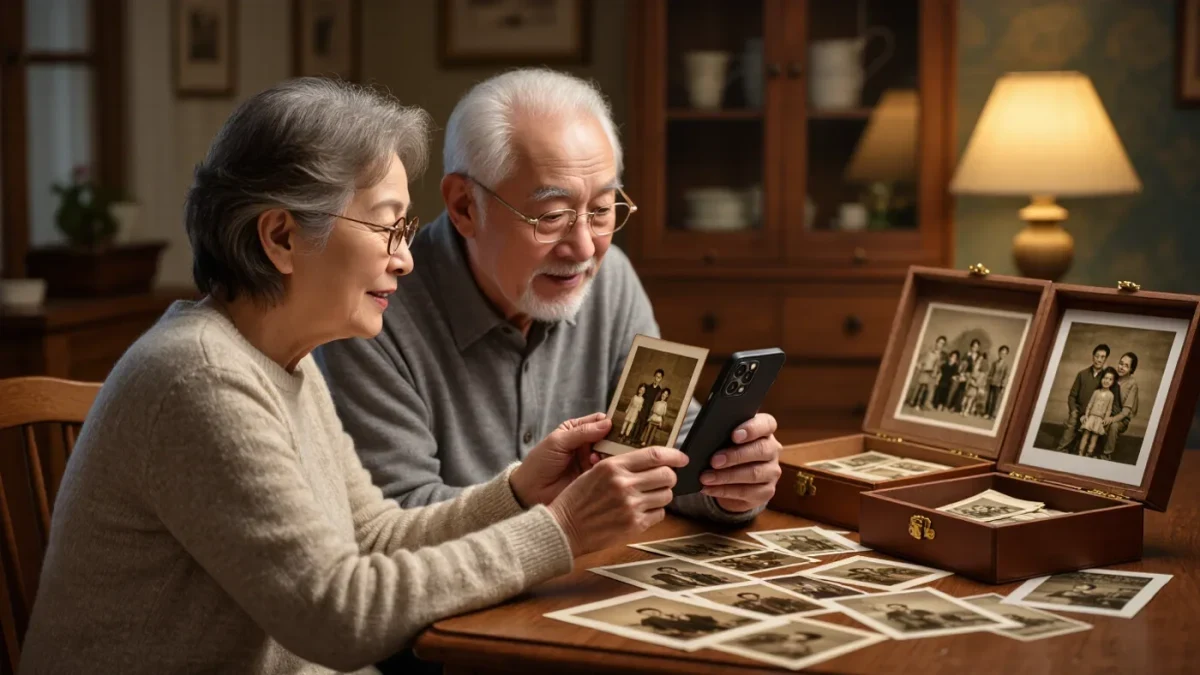
Nostalgia posts are among the most effective misinformation online because they flatter the reader's memory instead of attacking it. The claims are concrete — prices, crime, manners, family life — and the format is always the same: an undated photo, a round number, a sigh. Verification runs the other direction: historical prices sit in archives and statistics agencies, crime records sit in decades of compiled data, and old newspapers sit in searchable databases. When a 'back then' claim cannot be dated or sourced, that is not a fact about the past — it is a fact about the poster.
Why does 'the past was better' spread so well?
Because it is unfalsifiable as a feeling and viral as a claim. Psychologists have long described rose-tinted memory — people genuinely recall their own past more warmly than they experienced it. Misinformation exploits that sincere bias: post a photo of a 1970s street with a caption about cheap rent and safe nights, and every share is partly a memory, partly an ideology, and not at all a citation. The audience does the persuading themselves.
What do fake nostalgia claims usually get wrong?
Numbers, mostly. Price posts compare a grocery basket across decades without adjusting for wages — the milk was cheaper and so was the hourly pay. Crime posts claim safer streets against compiled statistics showing, in many countries, violent crime substantially higher in earlier decades. And the photos: 'simpler times' images are routinely staged stock, film stills, or dated to a different decade entirely. Reverse image search plus a statistics database kills most of these posts in under five minutes.
Who keeps the real records of the past?
Institutions, continuously. National statistics agencies publish long-run price, wage and crime series. University and government archives hold searchable newspapers. Public libraries maintain local historical collections. These sources have names, methods and corrections processes — everything a viral post lacks. For United States figures, .gov statistical portals carry the raw decades; comparable agencies do the same in other countries. The past is unusually well documented, which is exactly why undated nostalgia is a choice, not a necessity.
Why is nostalgia used for political messaging?
Because 'restore' is a powerful political verb, and every restoration needs a golden age to point at. Analysts of propaganda describe nostalgia as a standard tool: promise a return to an imagined past, and the promise cannot fail because the past never existed as described. When a political movement's claims about the good old days are checked against the record — wages, mortality, crime — the record usually disagrees, which is why the claims arrive as memes rather than citations.
How do you check a 'back then' post?
Four steps. Date the image: reverse image search for the earliest copy. Date the number: find the series it claims to come from, with its year. Adjust honestly: compare prices against wages of the same year, not today's. And check the emotion: ask what the post wants you to conclude, then ask for the source that supports it. A nostalgia post that survives all four is rare enough to be worth resharing.
Is remembering fondly wrong?
No — and that is the point of keeping it honest. Warm memory is human; fabricated history is content. The line is the claim: 'I miss' is yours to say, 'it was' belongs to the record. The archives keep the second one, and they are open to everyone.
What are the most common nostalgia fakes?
Four recur constantly. The price meme — a vintage receipt or invented figure comparing decades without wages. The crime meme — 'we never locked our doors,' against compiled crime statistics showing many countries' violence rates far higher in the remembered decades. The photo meme — staged or misdated images standing in for an entire era, frequently film stills or advertising shots presented as candid life. And the parenting meme — claims about how children were raised, contradicted by the era's own newspapers, which complained about the same things in the same words. Every one of these checks against a database that is free, public and older than the internet's memory of itself.
Can nostalgia ever be used honestly?
Constantly, and the difference is discipline. Honest nostalgia says what it is: memory, memoir, feeling. It dates its photos, hedges its comparisons and does not sell policy. The dishonest version always ends the same way — a claim about how things were, attached to an instruction about what to do now, with the past invented to fit the instruction. When a post's warmth comes bundled with a command, check the bundle: the warmth is probably real, and the history is probably the wrapping.
For more context, read Trace any viral photo to its real source.
For more context, read meme literacy.
For more context, read Fan theories about TV shows: theory or disinformation?.