The most famous staged viral video in internet history was unmasked within weeks: Lonelygirl15, the teenage vlogger who mesmerized YouTube in 2006, was confirmed that year to be a fictional character played by an actress, with a writers' room behind her. Confirmed, dated, documented. Nearly two decades later the format has industrialized, and the tells have barely changed.
The distinction that matters is not real versus fake. It is documented versus performed — and performed clips rarely declare themselves.
Why does the camera always seem to be rolling early?
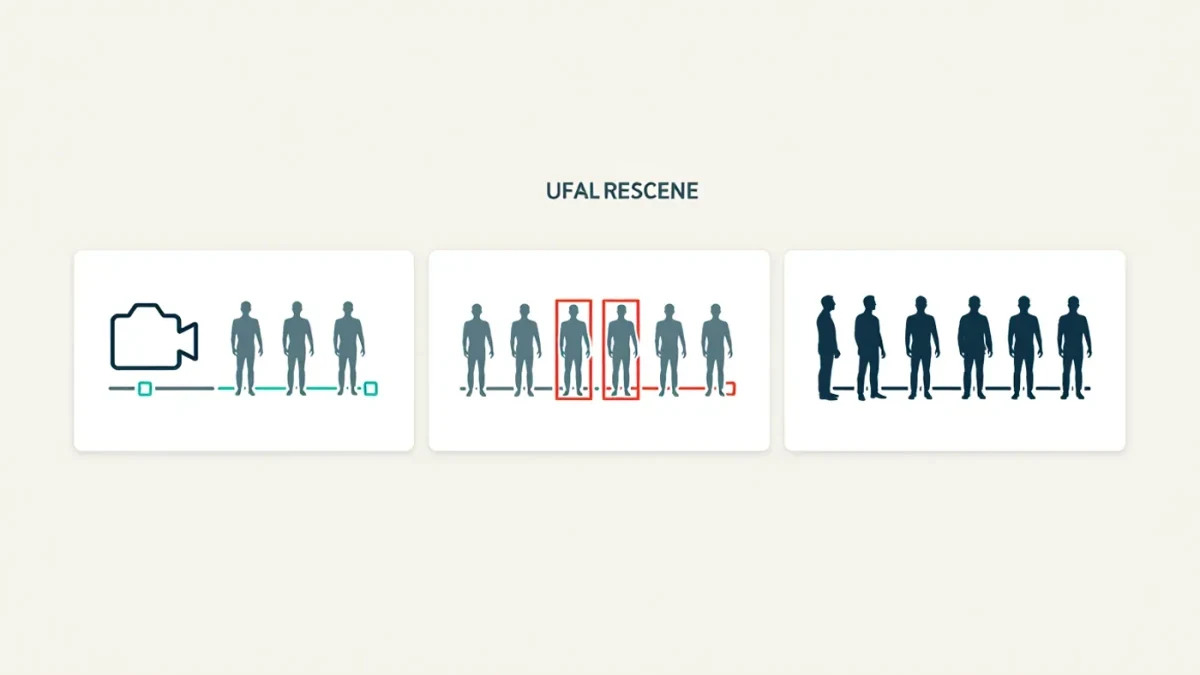
Because a staged clip needs the setup, not the payoff. Real accidental footage usually starts mid-action: the filmer reacts, the frame wobbles, the beginning is missing. A performance starts before anything happens — steady frame, centered subject, clean composition of a scene that has not yet become news. When the camera is already perfectly placed for the surprise, ask who placed it. That single question dismantles most staged clips.
What does the timing give away?
Real chaos is boring for long stretches and badly framed at the peak. Staged chaos is efficiently paced: nothing wasted, the punchline lands on beat, nothing obscures the payoff. Convenient, in the forensic sense. Multiple observers in frame who all ignore an extraordinary event — a reaction gap — is another recurring tell, because extras are hired to not react.
Who profits from a staged moment?
Follow the account, not the clip. Marketing agencies have openly sold 'candid' viral moments since at least the 2010s, and some brands have admitted staging clips after the views were banked — those admissions are on the record. The supply chain: a production team, a seeding account, then organic reposters who supply free reach. The origin account's history usually shows the business: bursts of exactly this genre of miracle, nothing else.
Why do staged clips spread faster than corrections?
Because they are built to be spread. A staged moment is optimized for the share reflex: an emotional spike inside fifteen seconds, no context required, no ambiguity left over. A correction carries none of that payload — it is procedural, it arrives days later, and it asks the reader to feel foolish for enjoying the original. Platform mechanics reward the first emotional hit, not the audit. That asymmetry is why labeling at the moment of sharing matters more than debunking afterward.
What was the Lonelygirl15 playbook?
Intimacy at scale. A relatable talking head, direct address, apparent spontaneity — and a fictional spine. The 2006 reveal, covered by major outlets including the BBC, forced the first mass conversation about authenticity on the platform. The lesson that survived: audiences do not verify personality, they bond with it. Every staged clip since has exploited the same bond in shorter formats.
Can AI staging be spotted the same way?
Partly. Generative video adds its own artifacts — physics errors, morphing backgrounds, hands and text that degrade under scrutiny — but the older production tells apply first: too-perfect framing, too-perfect timing, no named filmer. Verification desks at Reuters and other agencies treat staging and synthesis as one question: where did this come from, and who answers for it?
Do staged clips ever admit themselves?
Sometimes, on purpose. The reveal is a second act: once the views are banked, a brand or creator discloses the staging and collects a fresh wave of coverage for the cleverness. The admission is itself a distribution strategy. Register: staging confirmed by the disclosure; the original share count was earned under a false premise either way.
Does the comment section give staging away?
Occasionally. Watch for the origin account replying smoothly to top comments, or for a cluster of early praise that reads like crew. These are weak signals, not proof — but combined with perfect framing and perfect timing, they push a clip from 'unconfirmed' toward 'signs of staging.' Weigh them, never lead with them.
How should a staged clip be labeled?
Not 'fake video' — 'staged, origin identified' when the production is traced, 'unconfirmed, signs of staging' when it is not. The ledger matters because a staged clip is real footage of a real performance; the false part is the claim that it was unplanned. That precision is what keeps a debunk credible. And if you cannot trace it at all, the correct action is the oldest one: do not repost it.
For more context, read Verify a viral video in five checks.
For more context, read recycled video misinformation.
For more context, read Anatomy of a celebrity apology video.